"Le votage de Salto et Drogo" is a project I did with 5 team mates. It was the final project of the specialized masters degree Interactive Digital Experience from the Gobelins and the CNAM-ENJMIN.
The goal was to create a vertical slice showcasing the game's intention and core gameplay.
PITCH
This is the story of Salto, a young fox in search of a new territory, and Drogo, a wolf who has lost his pack.
This single-player 3D adventure game, played in third person, invites us to discover their story on PC and Nintendo Switch.
This single-player 3D adventure game, played in third person, invites us to discover their story on PC and Nintendo Switch.
Over the course of about two hours, players will alternate between the two characters, juggling their abilities and observing their differences.
Aimed at teenagers, The Journey of Salto and Drogo is an introspective adventure set in a natural, twilight world.
Aimed at teenagers, The Journey of Salto and Drogo is an introspective adventure set in a natural, twilight world.
Will you be more like Salto or Drogo?
INTENTION
Our first step was to define the intention of our game. We wanted to transmit a message to our teenagers target, which was : it is possible to overcome changes in our lives through self-acceptance and confidence in our own abilities, but also through accepting others and mutual support.
We wanted the player to alternate between two characters that both had two different visions of the world (changes of music and sky colors depending on which character was controlled) and different skills to complete puzzles in a 3D environment.
TARGET RESEARCH
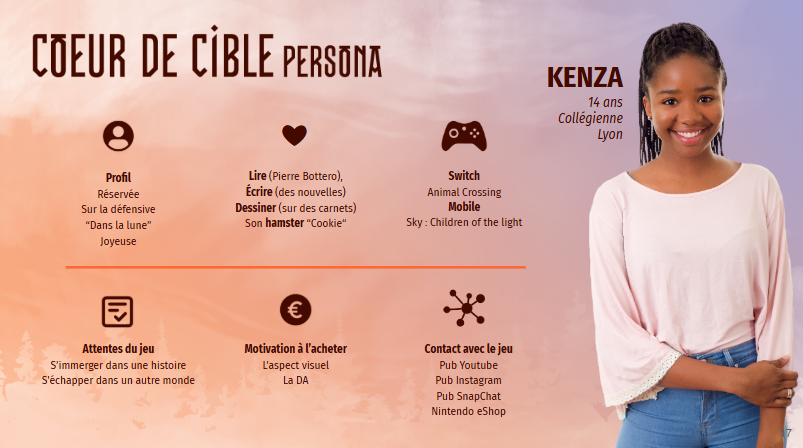
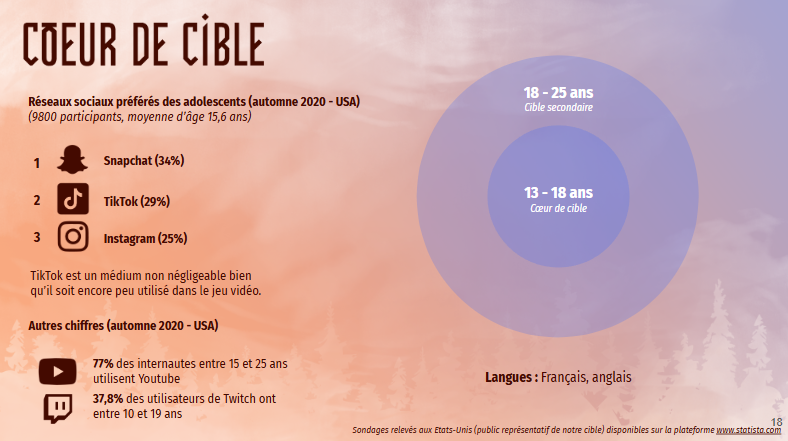
To establish our tagret, we created a persona of a typical player whom we would like to adress our game, as well as a broader definition of our targeted players (teenagers from 13 to 18 years old being stressed about changes, and a scondary target of young adults from 18 to 25 that would also be likely to project into our game).
GAMEPLAY OVERVIEW
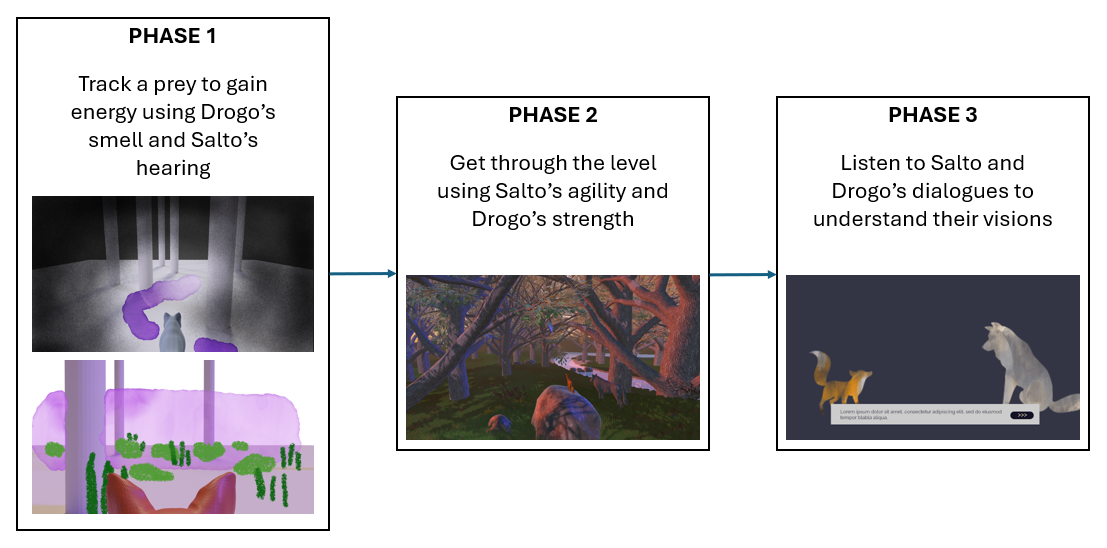
To showcase the characters differences and their teamwork, we designed a 3 phases gameplay:
GAME DESIGN
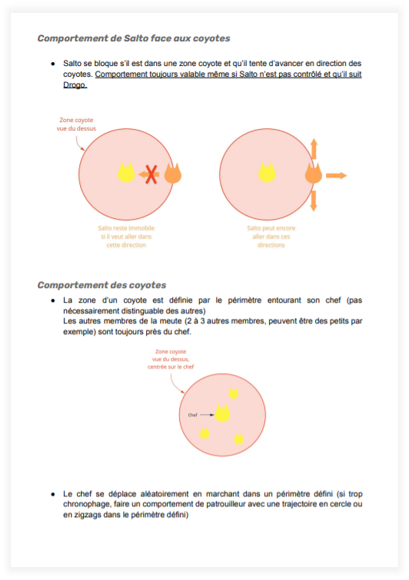
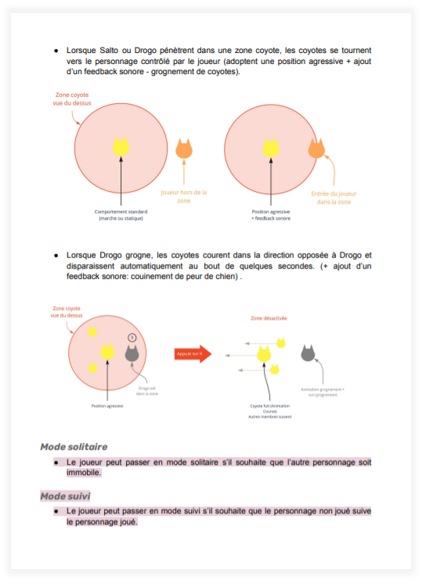
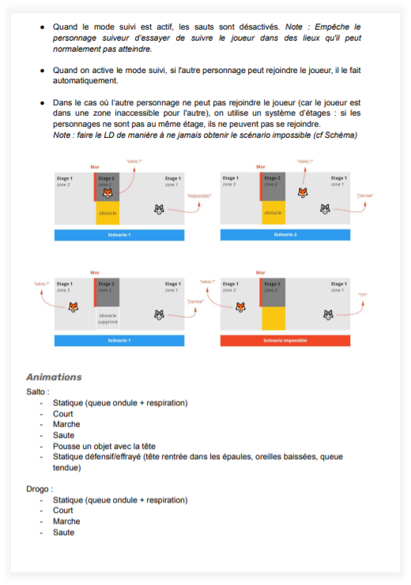
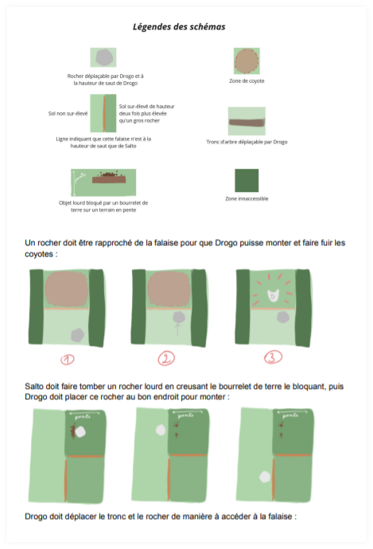
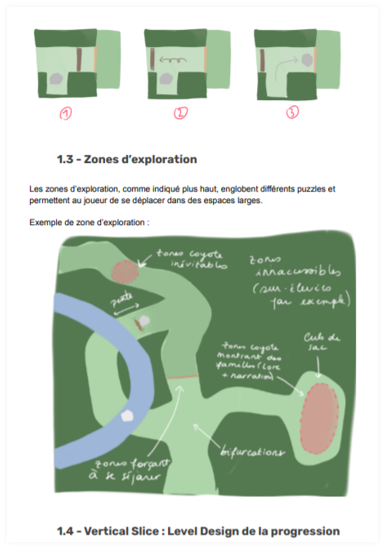
Once the core loop defined, I worked on defining further the actual gameplay mechanics. To do so, I created game design and level design documents to transmit a clear view of each features to our developper and the rest of the team.
Game design document excerpts:
Level Design document excerpts:
PLAYTESTS
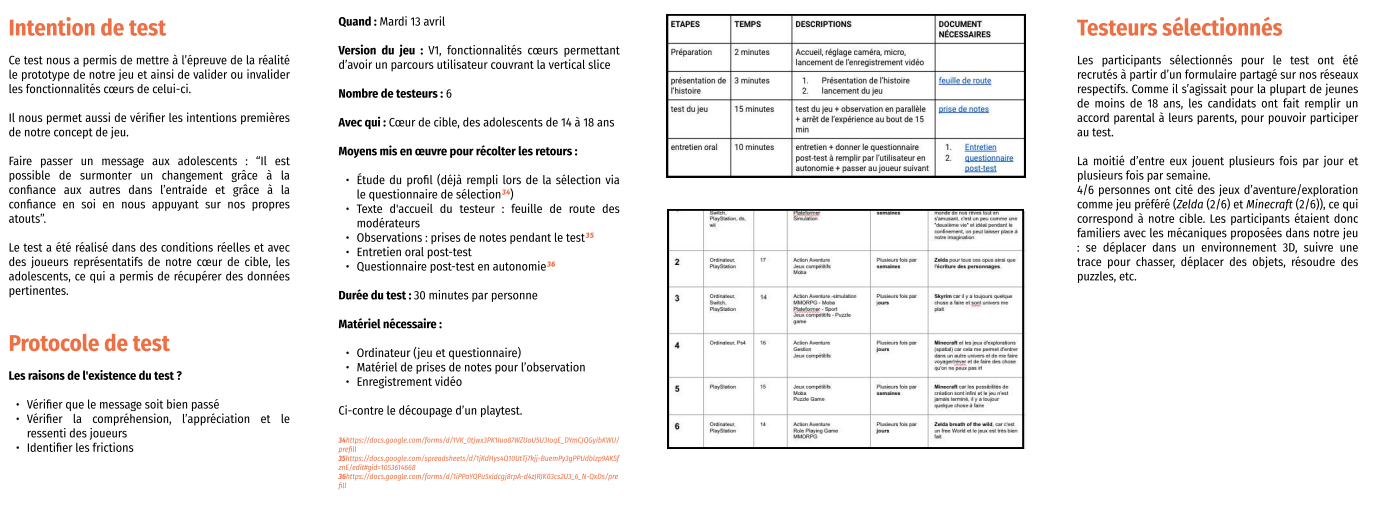
To test our game's mechanics and intention understanding, we organised remote playtests. The goal was to:
- Make sure the message has been clearly understood (message reminder: “It is possible to overcome changes in our lives through self-acceptance and confidence in our own abilities, but also through accepting others and mutual support.”)
- Ensure that the controls are pleasant to use.
- Identify points of friction and misunderstanding.
- Ensure that the controls are pleasant to use.
- Identify points of friction and misunderstanding.
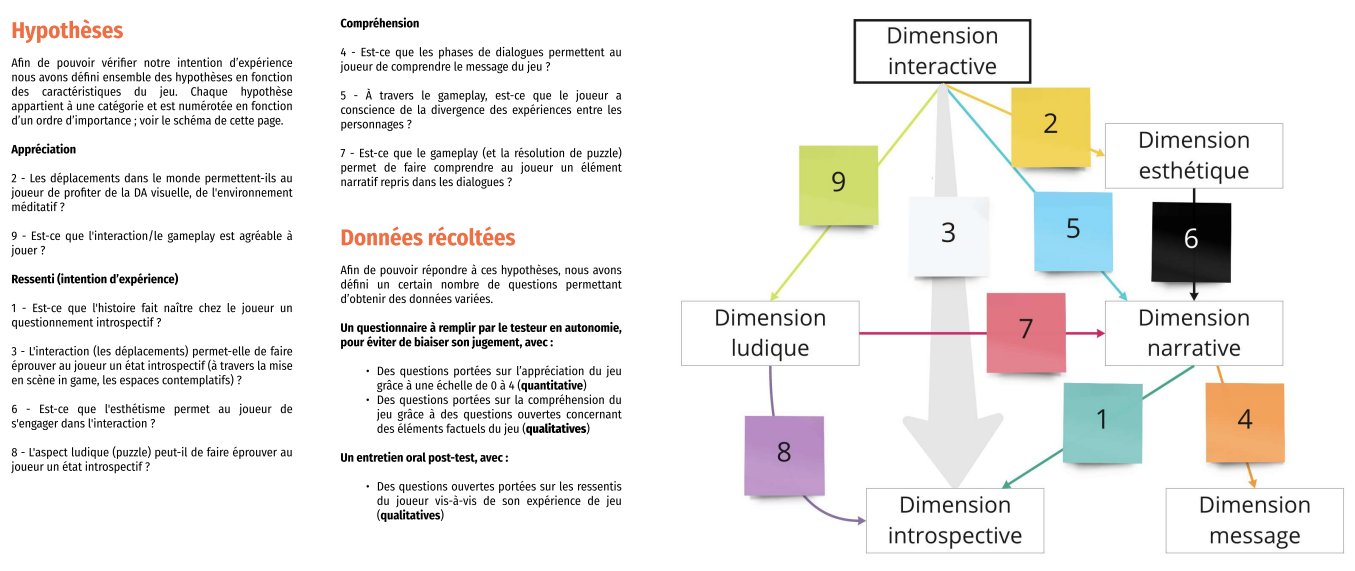
To determine this, we formulated 11 questions :
1. Does the story inspire introspective questioning in the player?
2. Do movements through the world allow the player to appreciate the beauty of the environment?
3. Does the interaction/gameplay evoke an introspective state in the player (through in-game staging or contemplative spaces)?
4. Do the dialogue phases help the player understand the game’s message?
(Reminder of the message: it is possible to overcome change through trust in others and mutual support, as well as through self-confidence and reliance on one’s own strengths.)
5. Does the narrative make the player want to help the characters — does it engage us? (especially at the beginning of the game, for the first play session)
6. Does the art direction allow the player to feel the characters’ personalities (through distinct visions and color palettes)?
7. Through gameplay, is the player made aware of the divergence in the characters’ points of view?
8. Should the aesthetic aspect help engage the player in interaction?
9. Does the gameplay (and puzzle-solving) help the player understand a narrative element that is later reflected in the dialogue phases?
10. Should the playful aspect convey narrative concepts?
11. Is the game fun to play?
2. Do movements through the world allow the player to appreciate the beauty of the environment?
3. Does the interaction/gameplay evoke an introspective state in the player (through in-game staging or contemplative spaces)?
4. Do the dialogue phases help the player understand the game’s message?
(Reminder of the message: it is possible to overcome change through trust in others and mutual support, as well as through self-confidence and reliance on one’s own strengths.)
5. Does the narrative make the player want to help the characters — does it engage us? (especially at the beginning of the game, for the first play session)
6. Does the art direction allow the player to feel the characters’ personalities (through distinct visions and color palettes)?
7. Through gameplay, is the player made aware of the divergence in the characters’ points of view?
8. Should the aesthetic aspect help engage the player in interaction?
9. Does the gameplay (and puzzle-solving) help the player understand a narrative element that is later reflected in the dialogue phases?
10. Should the playful aspect convey narrative concepts?
11. Is the game fun to play?
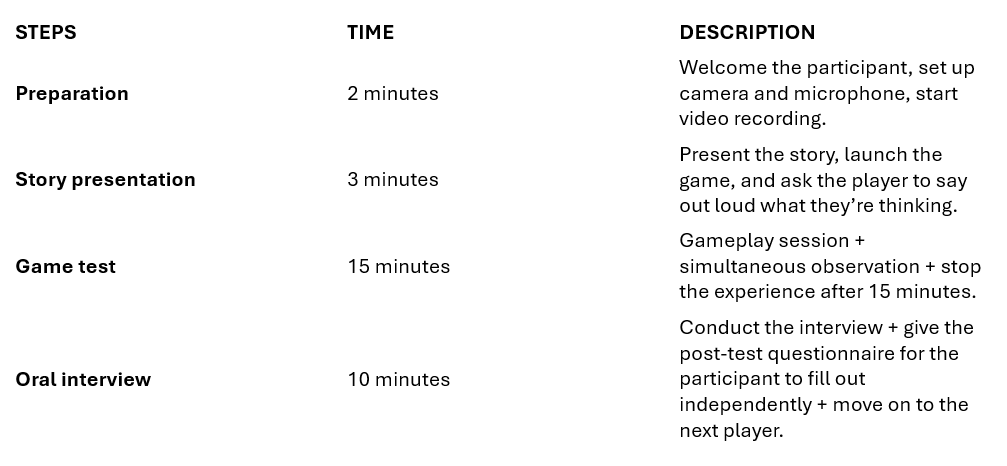
Playtest's flow
We organized the playtests the following way to maximize our information gathering:
RESULTS
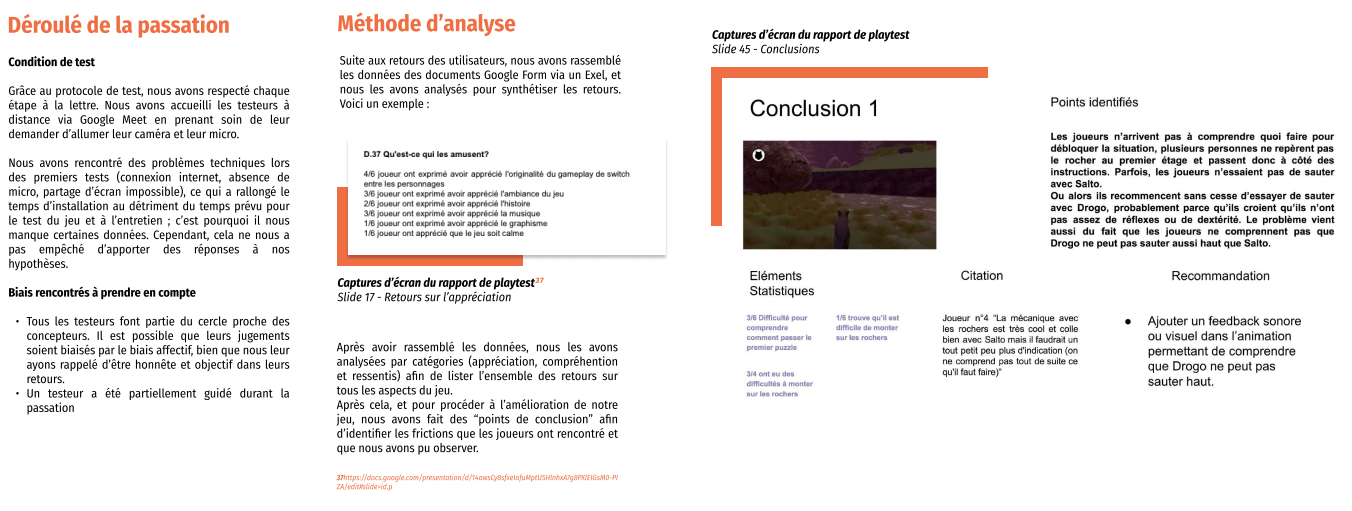
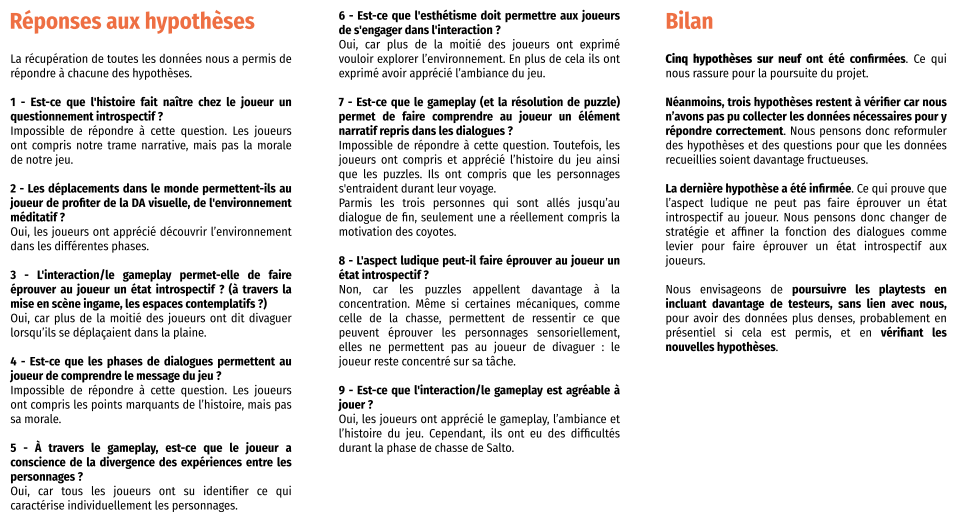
Once all playtests made, we analysed the results and transcripted them into iteration focuses. I added below the restults (in french) of our analysis: