OVERVIEW
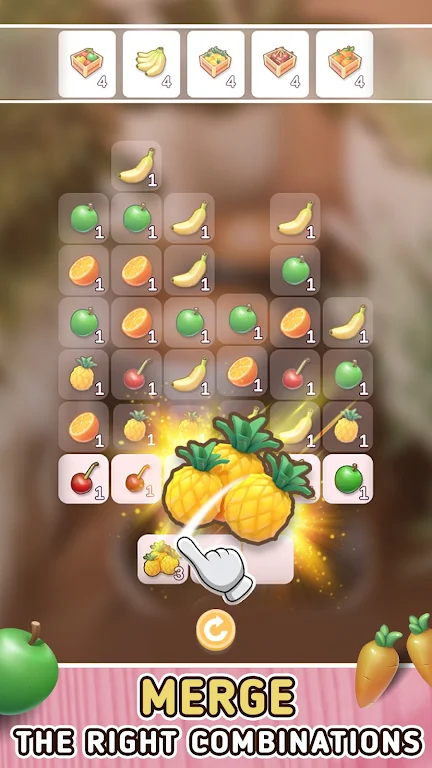
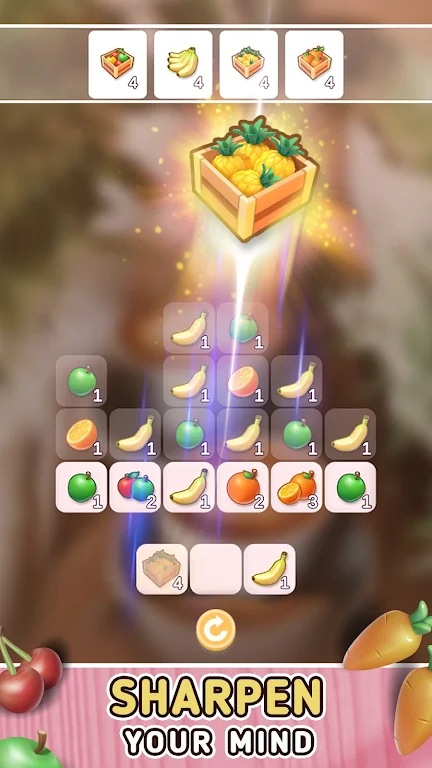
Merge Eat! is a puzzle 2D mobile game in which the player needs to merge 2 identical items to upgrade them and reach the objectives on the top of the screen. When all objectives are complete and the board is cleared, the player gets to the next level.
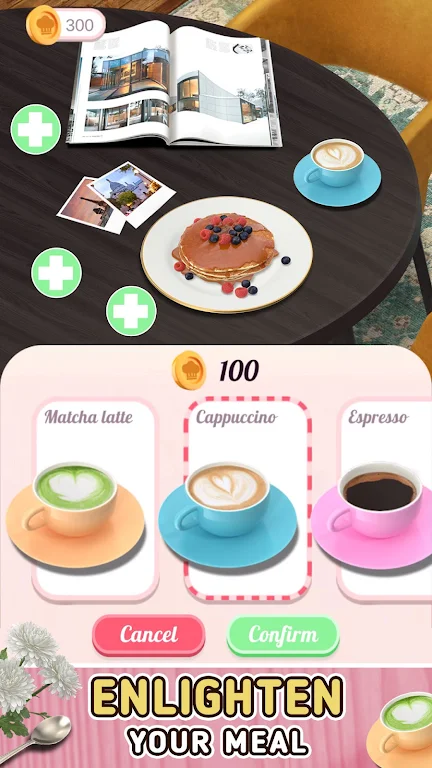
As a side quest, the player can use coins earned during the puzzle phase to decorate different cozy scenes.
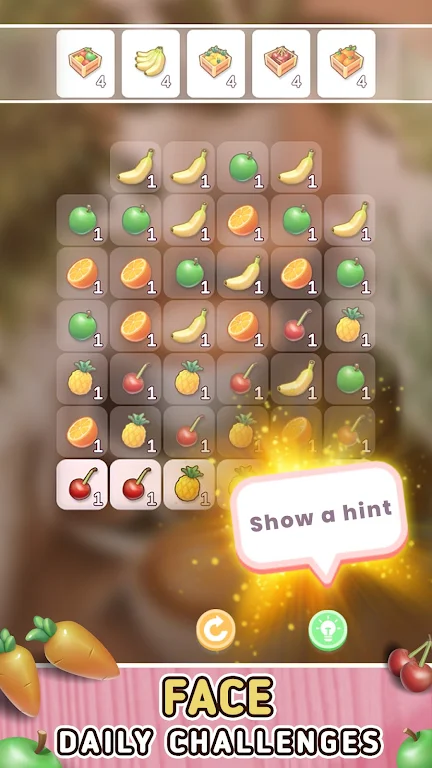
BRIEF
Design a 2D merge game targeting middle-aged women (estimated target of games like Candy Crush).
GAME LOOP
As Merge Eat!'s goal was to be a casual puzzle game, the core game loop was very straight-forward. The player would go through each levels and earn coins that they could use in an optional meta-game (not specified in core loop) to customize cozy sceneries.
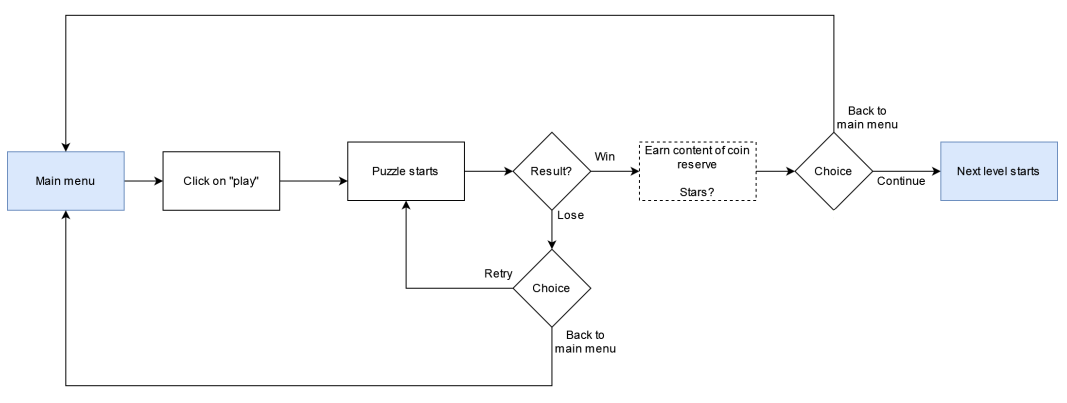
Level making & balancing
As the core gameplay was quick to implement, the challenge lied into level making. The game had to be both casual and challenging and required many testing and iterations.
I created a document where levels were set up as arrays to have a broad vision of all levels.
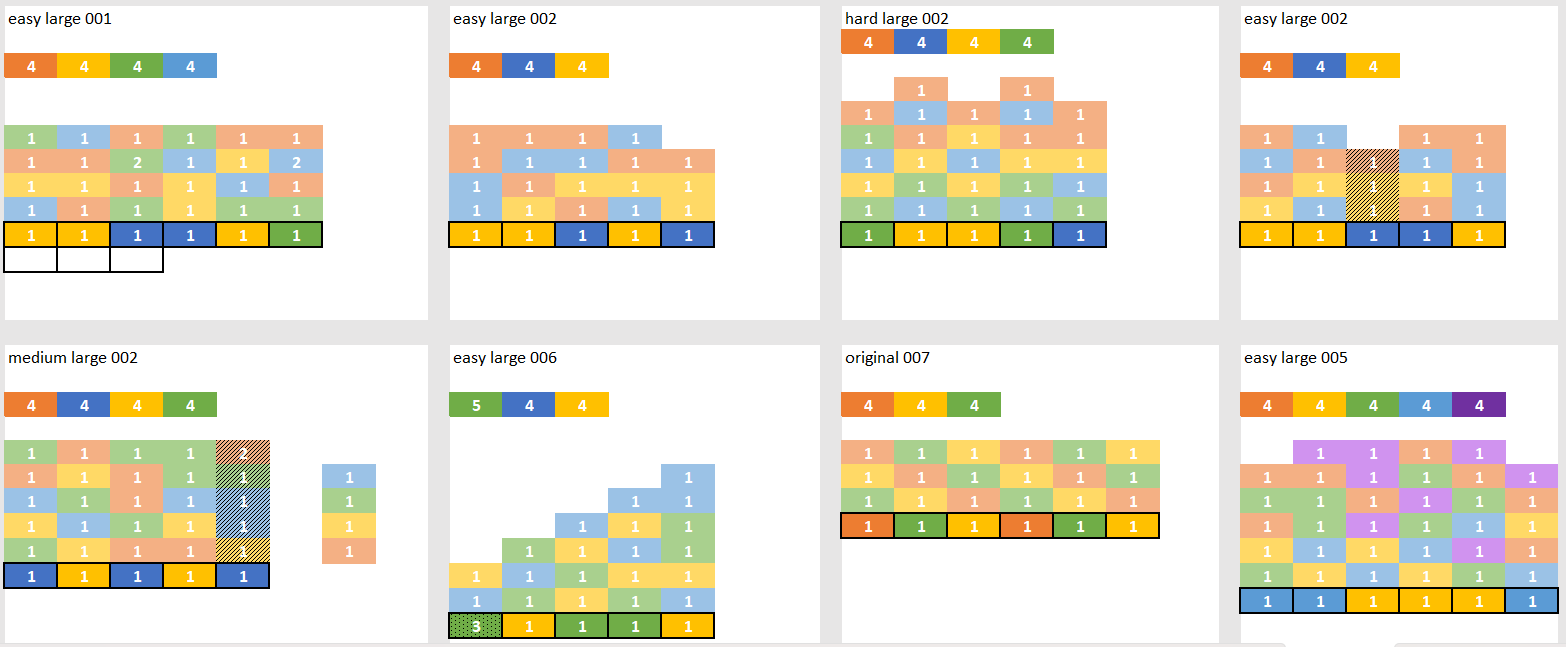
Exceprt of my level design document
Then I created a table in which all levels were entered and made people from other prototyping teams play each level. I asked to write down for each level the amount of trials before winning, and stated that a difficult level was a level needing on average more trials to complete.
I then followed several resources found online regarding balancing puzzle games and set the flow of levels so it would alternate between easy and difficult levels. Only first levels were all easy to serve as a tutorial for players.
PLAYTESTS
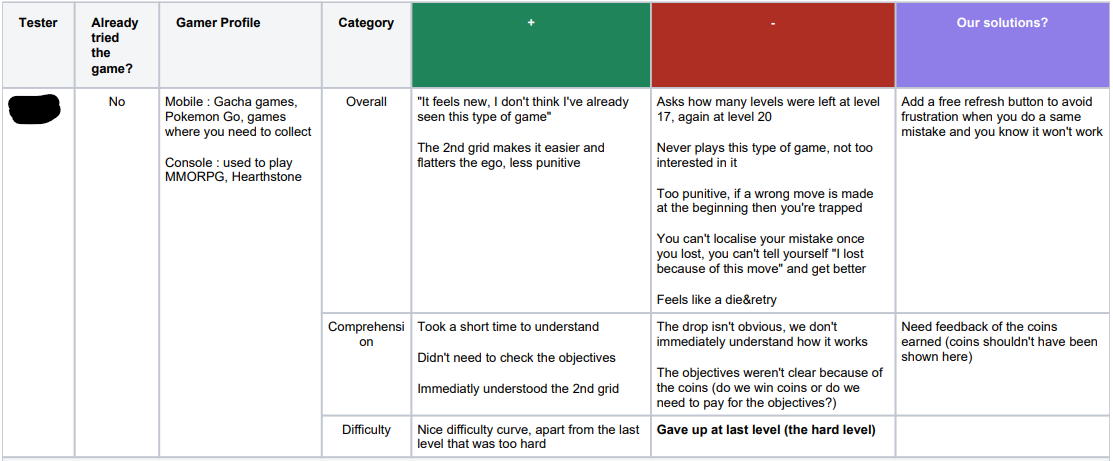
Alongside our UX/UI designer, I hosted internal playtests in which I asked players to play our prototype with both the UX designer and I watching them play. We would write down any oral reactions ("This is so hard", "What should I do now?", "That was easy"...) as well as non-verbal feedbacks (hesitating, skipping tutorial steps...).
Players were chosen depending on their gaming background and affinities to stay close to our target.
Results were centered in a folder with positive and negative feedbacks, alongside first-hand solutions and iteration ideas for negative feedbacks.
The first playtests would arrive around 1 month after starting our prototype and we would do up to 1 or 2 playtests a month during the following 2 months of development until release.
Excerpt of playtests results for Merge Eat! :