
From may 2021 to january 2022, I joined the company Medusims as a game and product designer. The goal was to enhance existing products and create new 3D simulators to train medical professional from different fields (pediatry, general medicine, emergency...). I worked on various tasks listed below.
CREATION OF A NEW PRODUCT
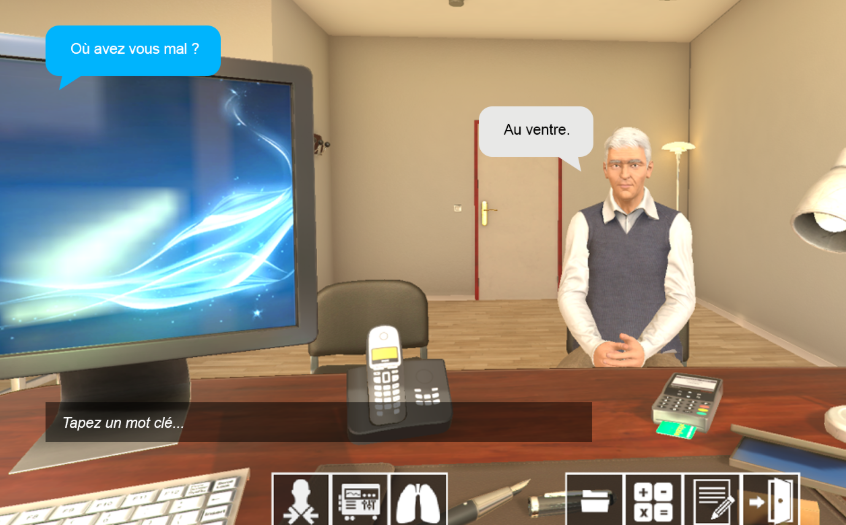
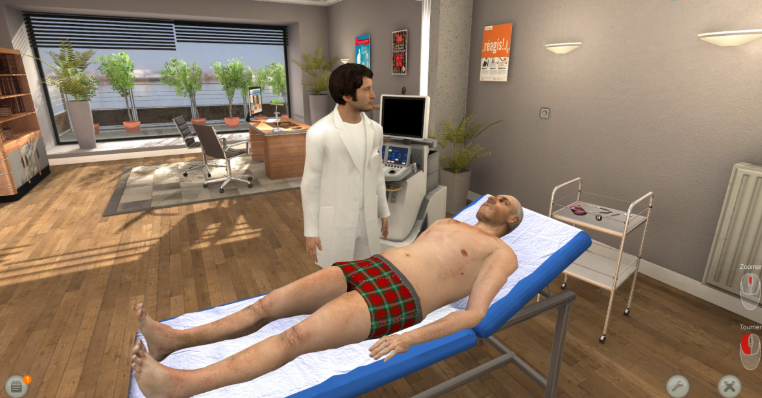
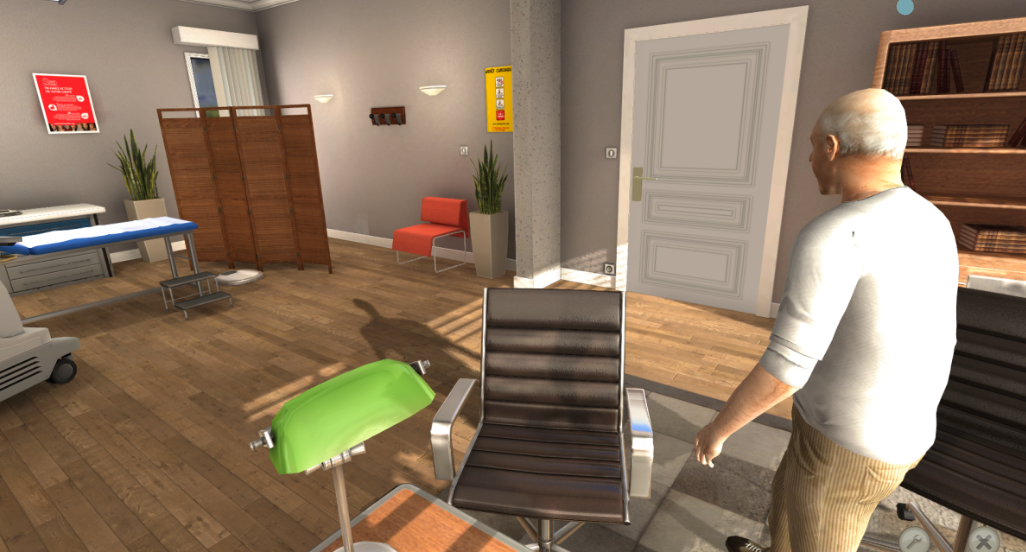
I was the main product designer for the creation of a new simulator to train general medecine doctors during their consultations. I was assigned a general doctor which I discussed with every week so he could describe the medical situations he wanted to showcase and verify the pedagogy.
Basically, the doctor would write down up to 3 situations and describe how he would want them to show. It would always be consultations but with different unflowings (only verbal consultation, auscultations...) depending on the patient's condition.
I would then translate his needs in actual gameplay mechanics, prototype them on Invision (now deleted), and transfer them to the development team.
RESTRUCTURATION
With the goal in mind to uniformize the architecture of all simulators, I designed a system allowing designers to generate new scenarios using no code - at first for classical consultation scenarios.
Step 1 : Redisigning alongside the lead developer the overall structure of the simulators (what to define first - environment, medical speciality, etc.?), how should patients and situations be related (can one patient be used in different type of specialities, is one new patient created for each scenario?) etc.
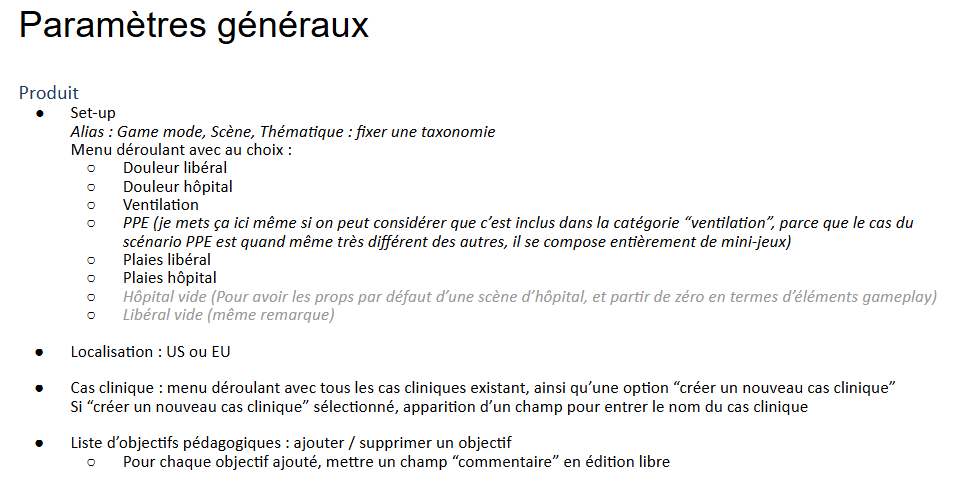
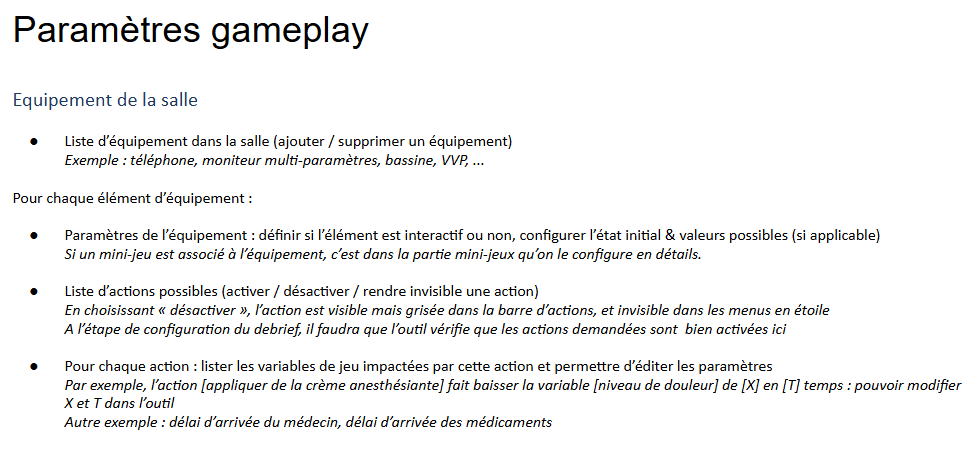
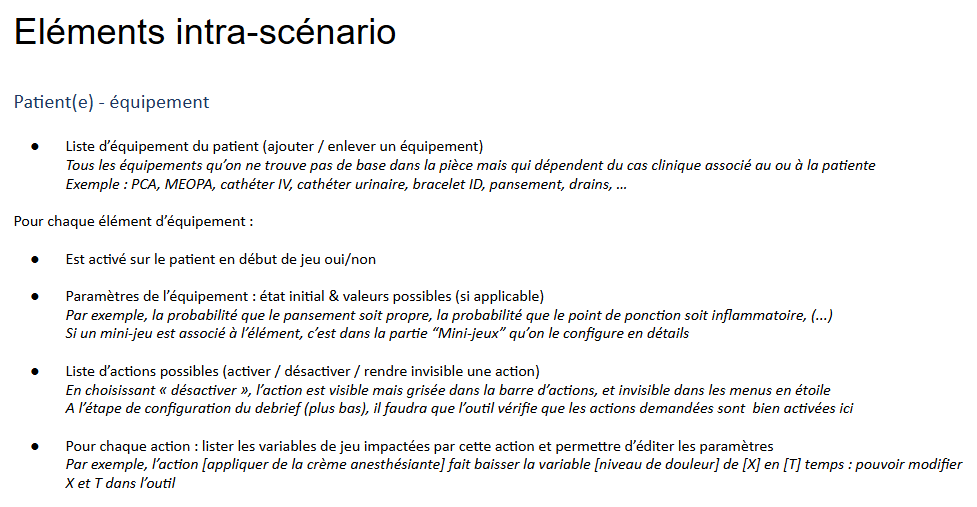
Step 2 : Designing a "no code" tool allowing designers to click on any options needed for the patient's case without needing additional development.
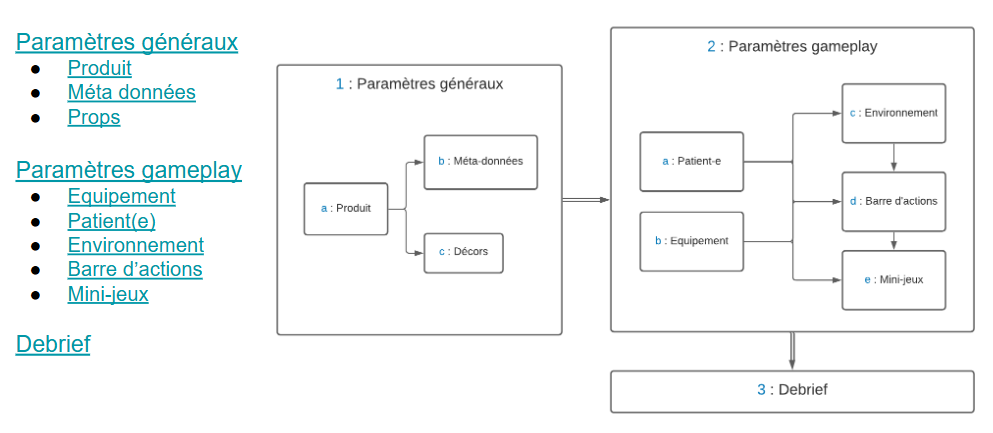
Global structure of the tool
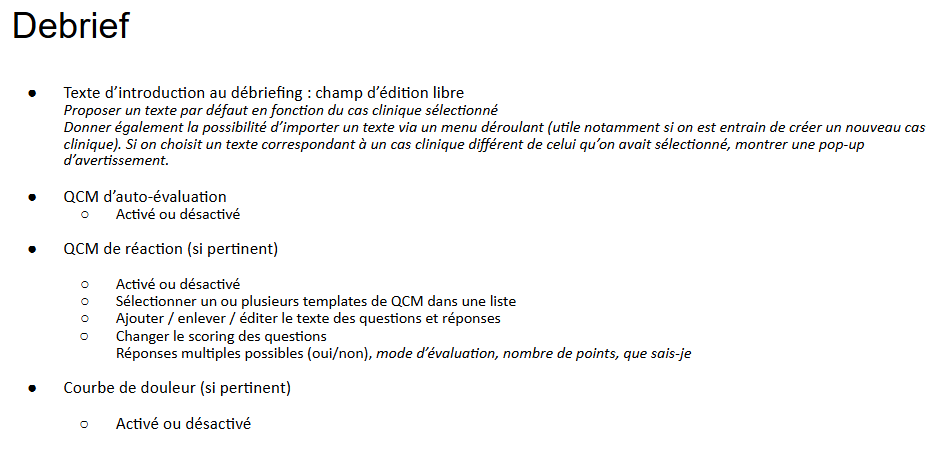
Examples of sections descriptions :
DESIGN OF THE DEBRIEFING TOOL
The simulators were to be used into nerses and doctor's training and needed a complete debriefing tool showcasing what they did right or wrong.
I worked on the design of a tool which goal is to set-up the debriefing sections and win/lose conditions alongside the doctors defining the scenarios.
At first I created flowcharts describing describing the flow of decisions:
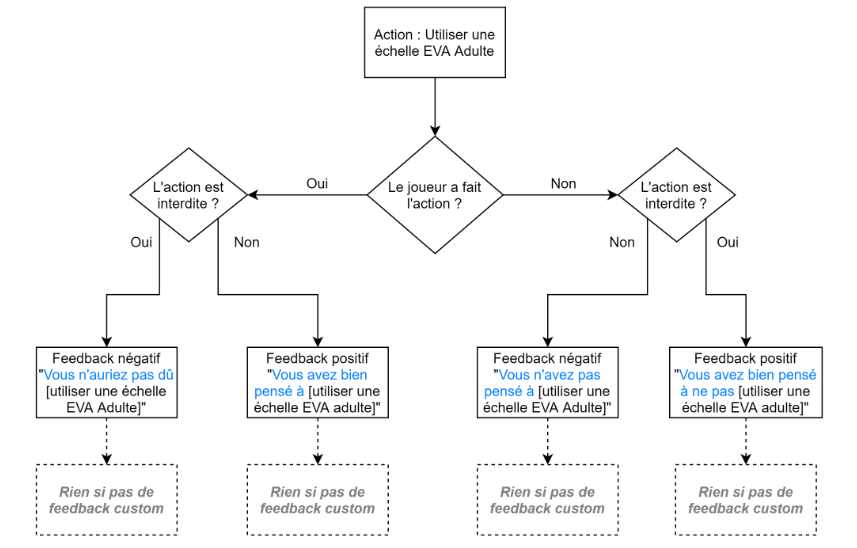
Example of macro flowchart
I then created mock-ups of the debriefing tool depending on what action I wanted to showcase:
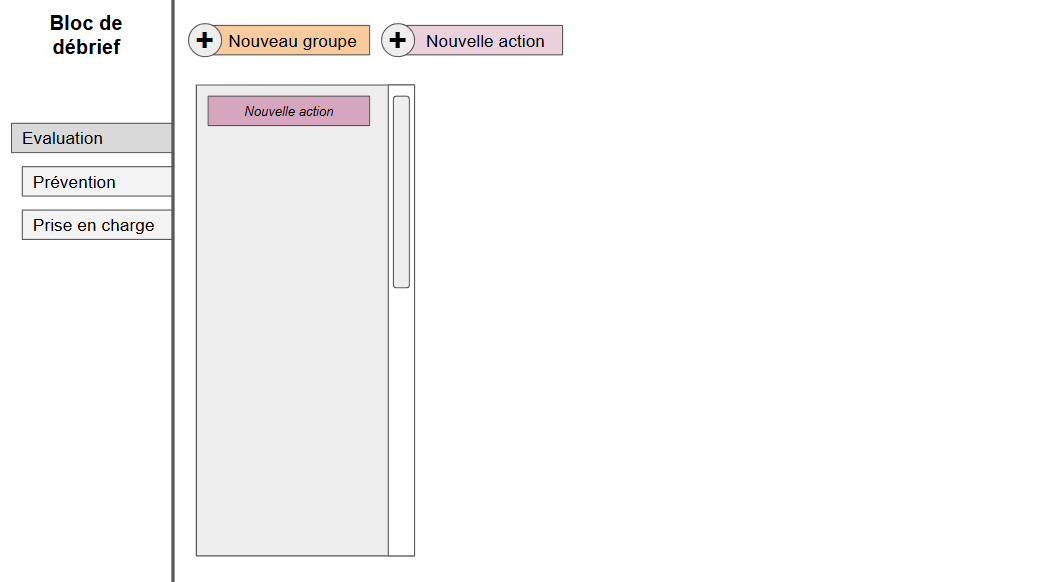
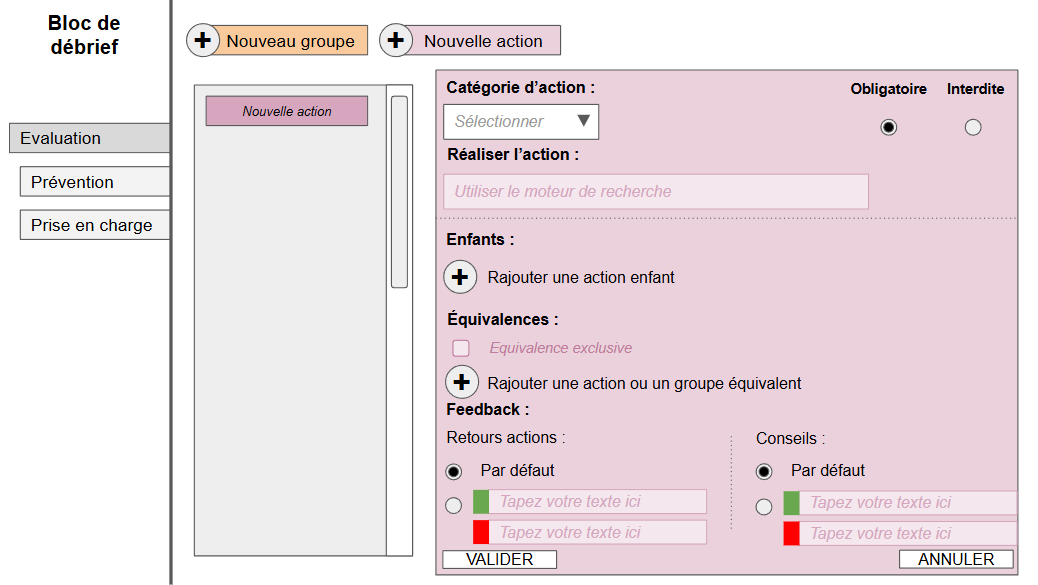
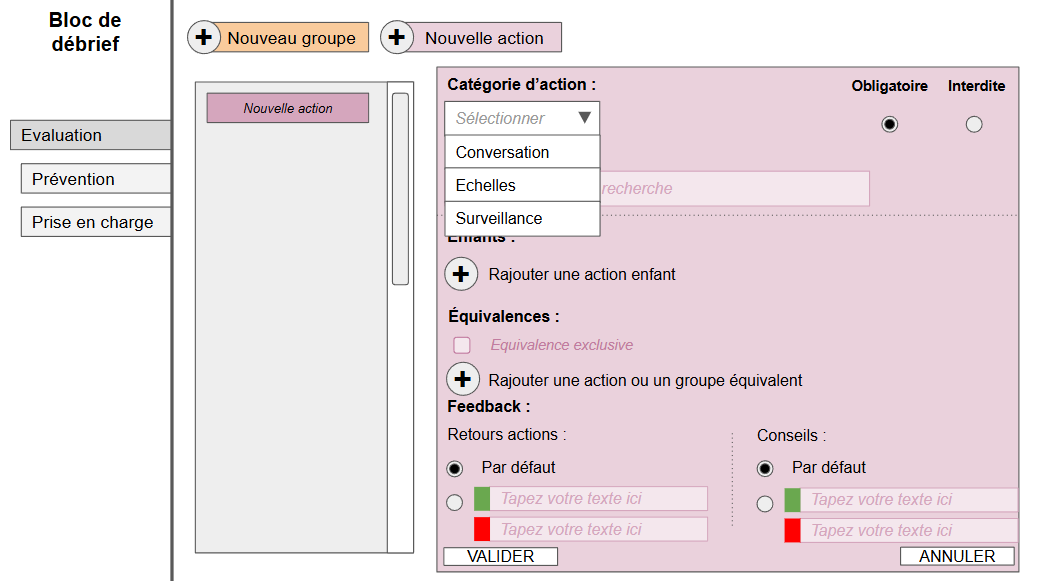
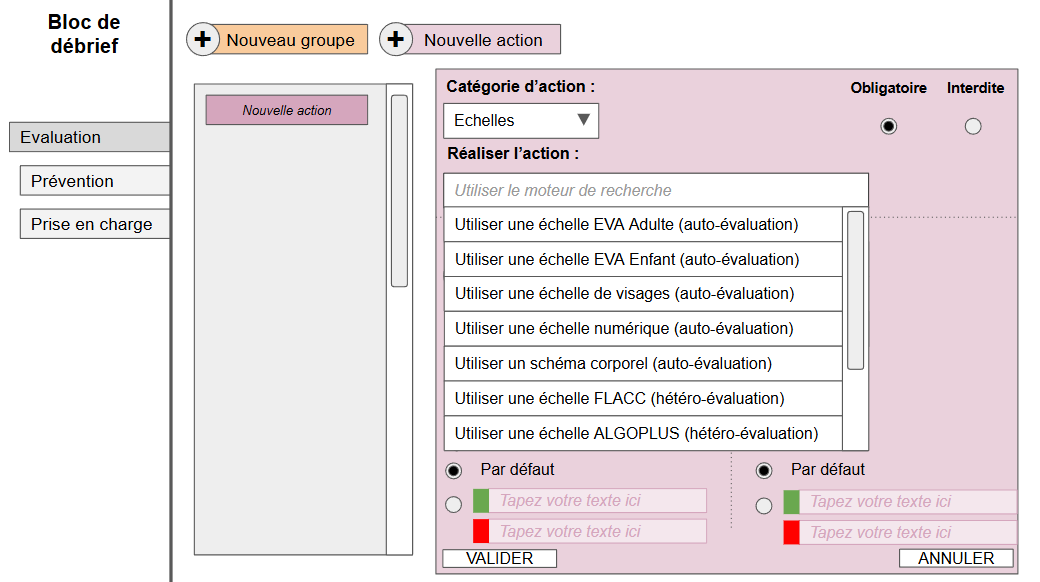
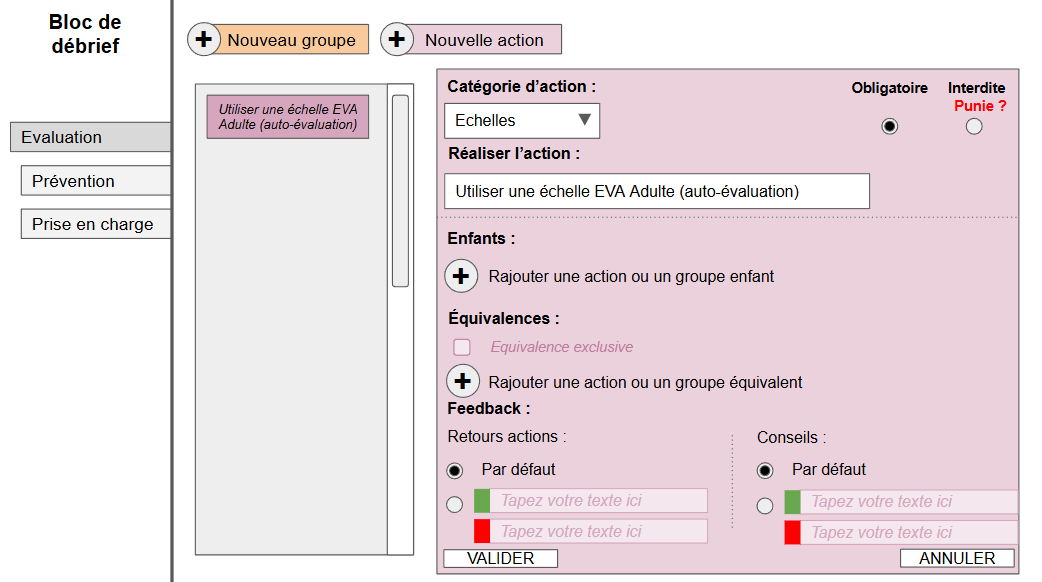
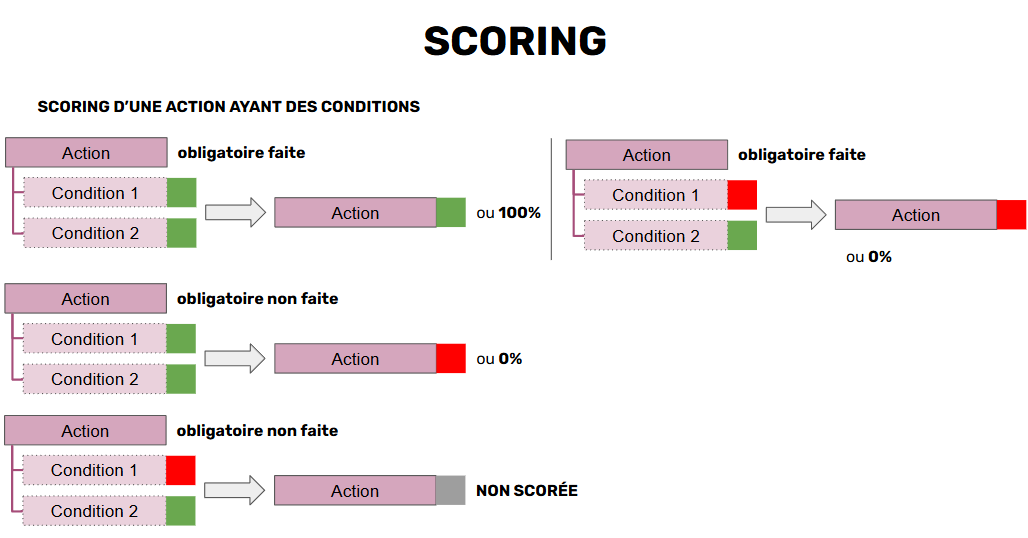
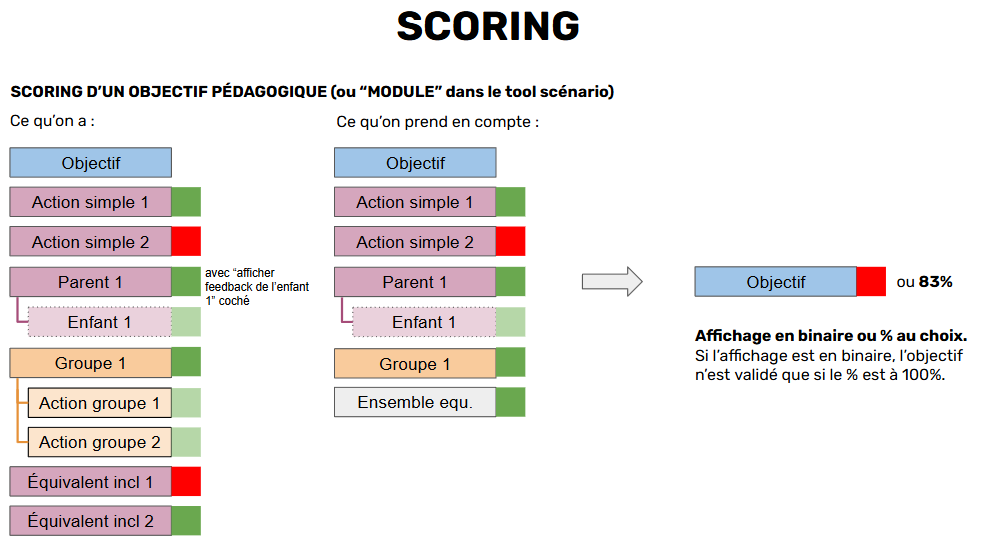
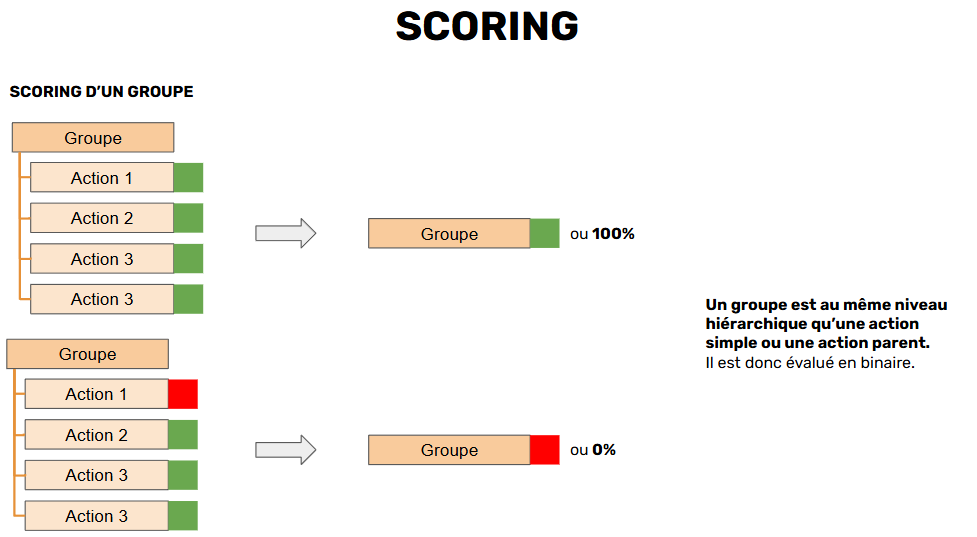
Finally I defined the scoring system by exploring all achievable results whether actions are co-dependent or not:
Adaptation from PC to tablet
All simulator were only available on PC and needed to be adapted to tablets so nurses and doctors could easily launch them from wherever they are.
The main part to adapt on my side was the UI (mainly menus) and the flow when opening the app (mockups not available anymore).
OLD
NEW
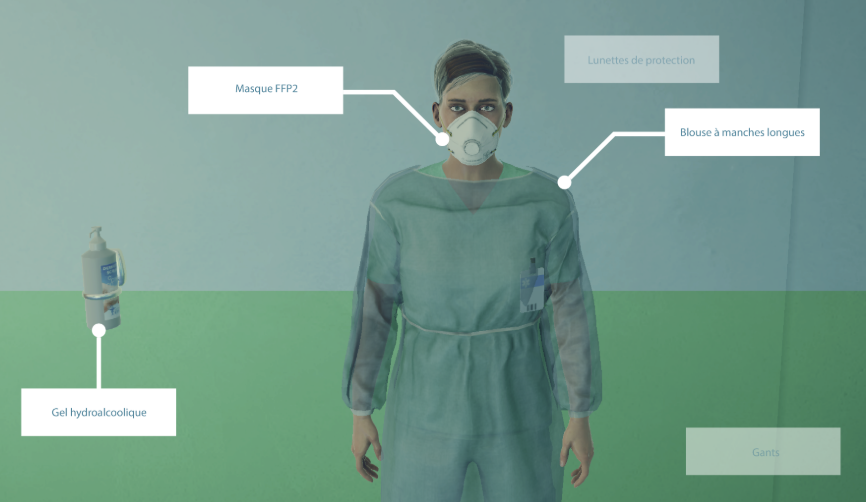
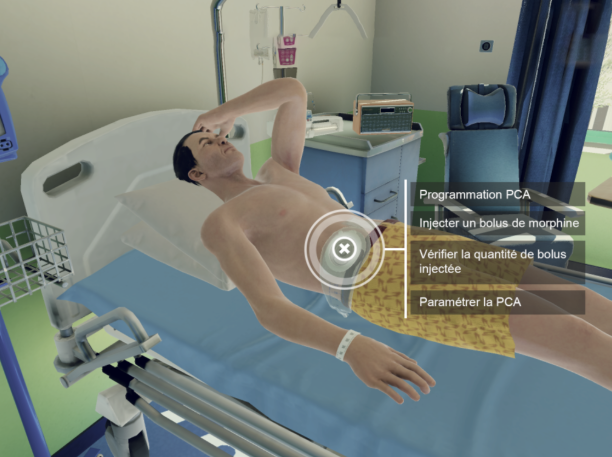
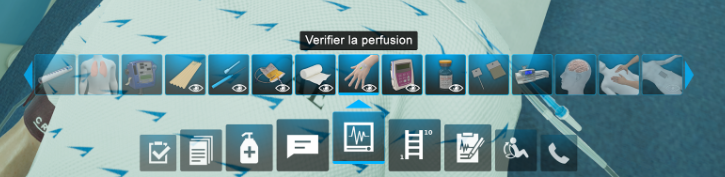
Diegetization
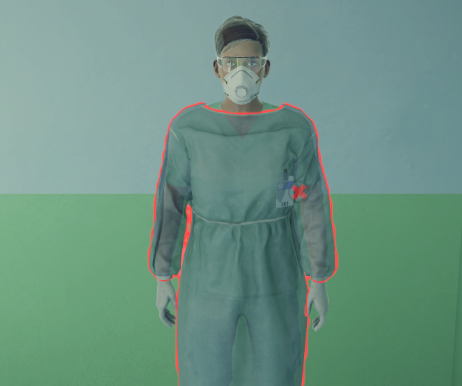
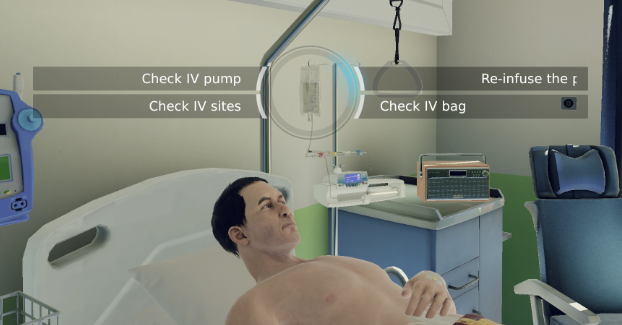
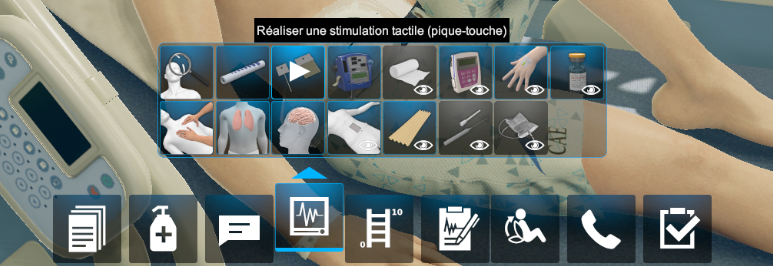
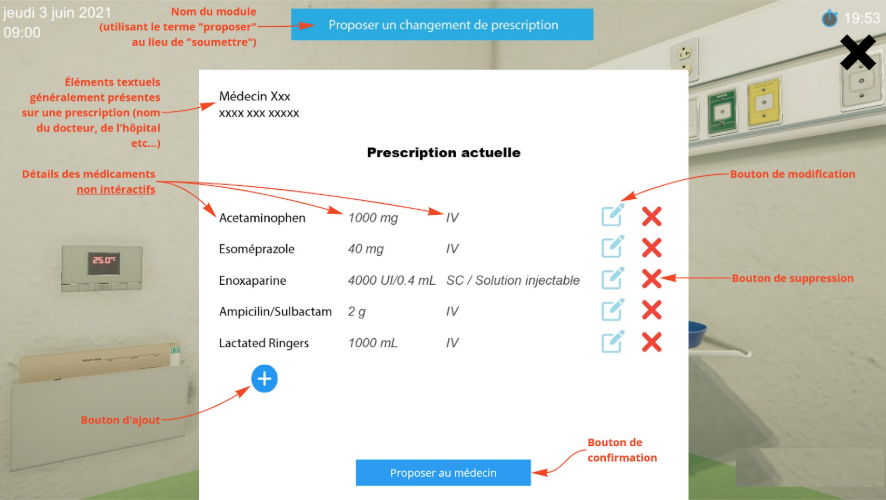
To enhance the immersion, some parts of the simulators needed to be diegetalized. For instance, tables were replaced by paper documents.
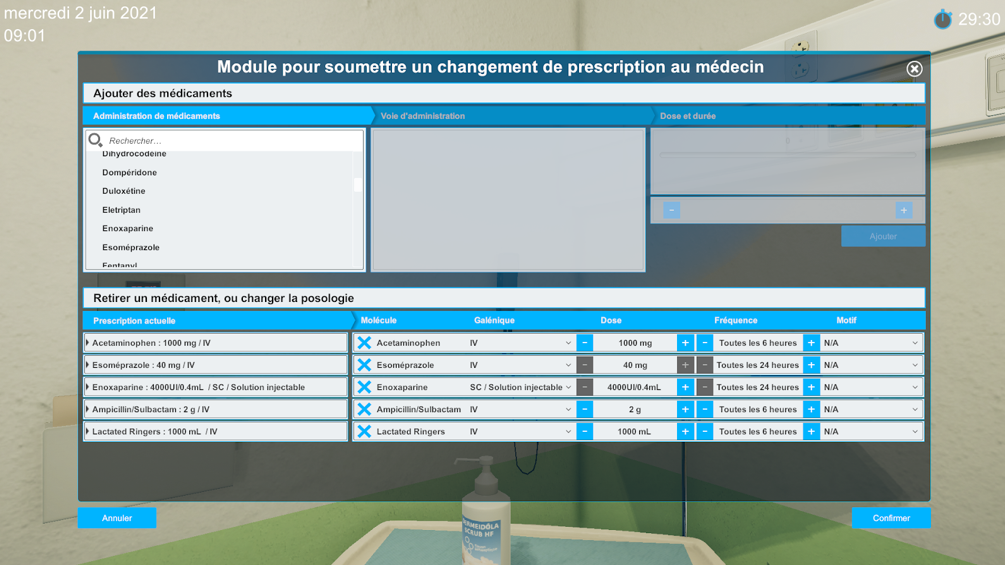
Old design
Mockup of new design
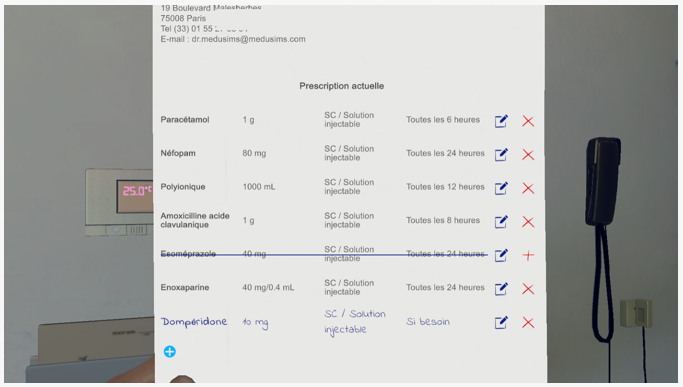
New design